When the Locker Costs a Quid: A Smarter Packing Plan for Pay-As-You-Gym

Photo: Jaggery , CC BY-SA 2.0, via Wikimedia Commons
The gym entry fee is no longer the whole fee
You scan in, put your bag down, and the locker asks for £1. The towel rail wants £2. The padlock you forgot is £4 from reception. None of these charges is huge. Together they can turn a straightforward session into a slow bleed of contactless payments. The pay-per-use gym has made a quiet shift: the monthly fee gets you through the door, but the small stuff now has a price tag. That changes what belongs in your bag.
This isn't a lament about gyms making money. It's a packing problem. If every forgotten item has a price, the smart move is to stop treating your bag as a storage unit and start treating it as a small, moving locker. The aim isn't to carry everything. It's to carry the right things so you don't keep paying for the wrong ones.
Why the £1 locker changes your packing decisions
A charge of £1 feels trivial until it happens three times a week. Then it's £12 a month, roughly the price of a decent resistance band or a couple of good pocket towels. The same goes for towel hire, padlocks and kit hire: each charge is small enough to ignore in the moment, but regular enough to show up in your bank statement like a bad habit.
The bigger effect is psychological. When you know a locker costs money, you either overpack — bringing a towel, padlock and spare everything to avoid the fee — or underpack and pay anyway. Both are inefficient. The useful question is not 'what might I need?' but 'what do I need often enough to justify carrying it?'
Carry, rent or leave: a three-bin rule
Use this rule for every item that could attract a charge.
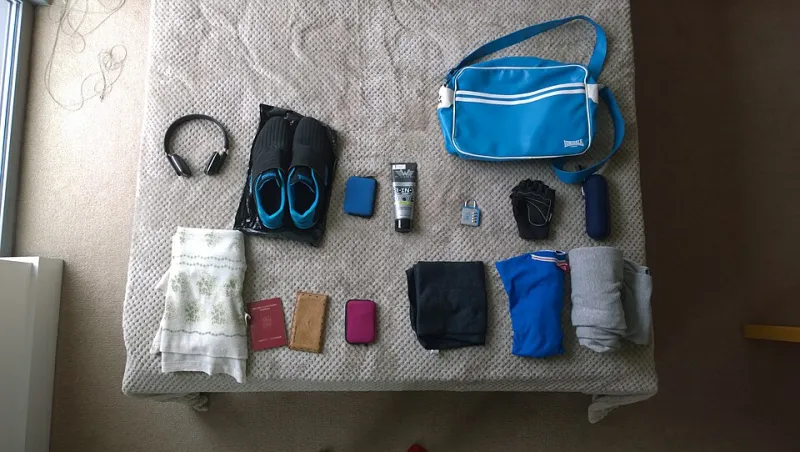
Carry it if it's small, cheap to replace, hygiene-critical or fit-critical. A padlock, a microfibre towel, a hair tie and a small toiletries bag all fit that brief. They earn their place because they are used often and cost little to own.
Rent it if it's bulky, occasional or genuinely better supplied by the gym. A full-size towel, a hairdryer, a yoga mat for a one-off class or a kit hire for a sport you play twice a year are reasonable rents. You are paying for convenience, not forgetfulness.
Leave it if it lives at home or work and only creates weight. Spare shoes, a full shower kit, a second outfit and 'just in case' kit are usually better staged than carried. If you commute, a small drawer at work or a pair of trainers left under the desk beats a heavier bag every day.
The fee-proof packing list
A pay-per-use gym bag should cover the small charges without turning into a suitcase. Start with the non-negotiables: a combination padlock, a compact towel, a water bottle, deodorant, a hair tie and a small pouch of toiletries. Add a folded tote for wet kit and a zip bag for anything that leaks. If your gym charges for towel hire, a microfibre towel is the best-value swap: it dries quickly, packs small and costs less than a few weeks of rentals.
Keep a £1 coin in a zip pocket if your locker still takes one. Even in 2026, plenty of UK gyms have a mixed system — contactless on the main lockers, coin-operated ones in the overflow changing room. A coin costs nothing to carry and saves you queuing at reception. If your gym is card-only, make sure your phone or card is accessible without unpacking the whole bag.
The tenner test
Before you add anything to your bag, do a quick sum. If the item costs less than the fee you'd pay for forgetting it, and you'd use it more than a handful of times, carry it. If it costs more than the fee and you'd use it rarely, rent it. If it costs nothing to leave at home and you won't miss it, leave it.
This is the tenner test: would you rather spend a tenner now on a decent version of the item, or spend a tenner over the next few months on rentals and replacement charges? It's not about being tight. It's about putting your money where it actually improves the session.
What not to do
Don't build a 'fee-proof' bag by stuffing in every possible item. That's just a different kind of cost: weight, clutter and the daily irritation of digging for your padlock. Don't buy cheap kit that fails after two washes. And don't assume every gym charges the same. Check the website or ask at reception; some sites include towels and lockers in the membership, while others charge for everything from a padlock to a hair dryer.
The Gym Tote take
The pay-per-use gym rewards a lighter, more deliberate bag. Carry the small stuff that saves you money and hassle, rent the bulky stuff you use rarely, and leave the rest at home. The £1 locker isn't a con. It's a nudge to know what you actually need. Pack for that, and the extras stop feeling like extras.