The Shoulder You Always Use: A Five-Minute Reset for Gym-Bag Carriers

Photo: Federal Bureau of Investigation (FBI), Public domain, via Wikimedia Commons
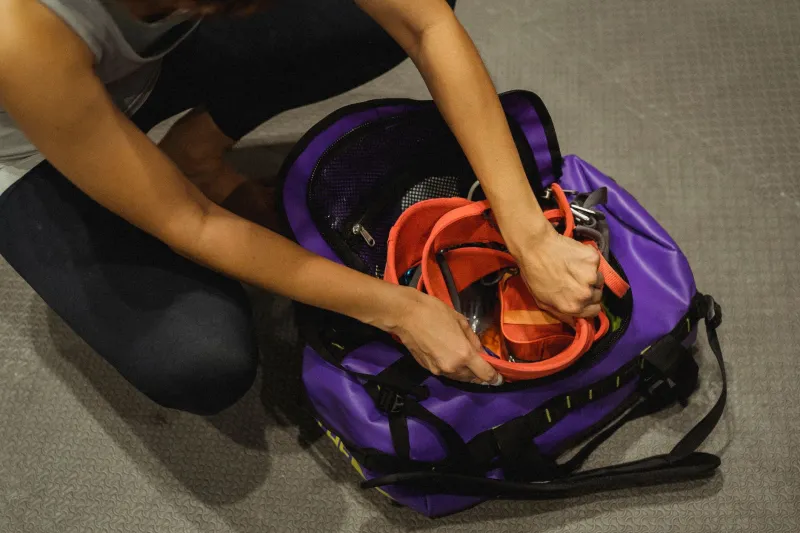
You know the routine. Bag on the right shoulder, phone in the left hand, headphones in, and a brisk twelve-minute walk to the gym. By the time you reach the changing room, your neck has a slight kink and there’s a familiar dent where the strap has been sitting. It’s not agony — just a low-grade niggle that disappears once you start warming up. Then it comes back on the way home.
That’s the thing about carrying a gym bag: the load is rarely dramatic, but the repetition is relentless. And most of us favour one shoulder without ever making a conscious decision about it.
Why the same shoulder wins every time
Habit, handedness and bag design all push you towards one side. If you’re right-handed, the right shoulder is the natural place to sling a tote while your left hand deals with keys, a coffee or a phone. One-strap bags are quick to grab and easy to swing on and off on a busy pavement. They feel efficient.
The body, however, is a chain. When you hang several kilos off one shoulder, that shoulder tends to hike upwards while the spine side-bends slightly in the opposite direction. Your opposite hip may shift out to counterbalance. None of this is catastrophic for a short walk, but do it twice a day for months and the upper traps on one side can become tight and grumbly. You might notice a stiff neck after long commutes, a dull ache between the shoulder blades, or the sense that your bag feels heavier than it actually is.
A quick reality check on load
Before you blame your posture, weigh the bag. A litre of water weighs a kilogram, so a full 1.5-litre bottle is 1.5kg on its own. Add a pair of trainers (often 800g–1kg), a towel, toiletries, a change of clothes and maybe a laptop, and plenty of UK gym-goers are hauling 5–7kg on one shoulder. If you weigh 70kg, that’s up to 10% of your body weight hanging off one side.
That’s not a reason to panic. It is a reason to be deliberate about how you carry it, especially if your gym is a 20-minute walk from the office or you’re hopping on the Tube at rush hour.
The five-minute reset
You don’t need a sports therapist or a new bag to make a difference. Set a timer for five minutes and work through this:
Minute one: empty and weigh. Tip everything out. Weigh the bag on bathroom scales, then weigh it again after you’ve removed the obvious excess. Most people find at least a kilo they don’t need.
Minute two: look at the strap. A narrow, unpadded strap concentrates pressure on a small area. If your bag has one, consider a wide, padded shoulder pad or a crossbody strap that distributes load across your torso rather than one shoulder. For heavier days, a backpack is genuinely kinder — even if it’s less fashionable.
Minute three: swap sides. Make it a rule: bag on the right for the walk to the gym, left for the walk home. Or switch at every crossing. It feels awkward for the first week, then it becomes automatic.
Minute four: adjust the drop. A bag that hangs at armpit height forces your shoulder to hike. Lengthen the strap so the bag sits around hip level, and keep it close to your body rather than swinging out.
Minute five: plan the heavy items. Carry an empty water bottle and fill it at the gym. Leave the second pair of trainers at home. Decant toiletries into small bottles. If you commute with a laptop, consider a backpack for that leg of the journey and a lighter tote for the gym itself.
What to move out for good
The “just in case” items are usually the culprits: a spare hoodie, a hardback book, a full-size shampoo, a bunch of heavy keys, a second towel. None of them are essential for a single session. Keep a small pouch for the true essentials — lock, card, phone, headphones — and use the gym’s lockers rather than carrying everything around the building.
The long game
If you already have persistent neck or shoulder pain, a five-minute reset is not a substitute for proper assessment. See a physio or your GP if discomfort lingers. But for the everyday, low-level stiffness that comes from a lopsided commute, small changes add up. Alternate which shoulder you use. Lighten the load. Choose a strap that doesn’t dig in. And give the shoulder you always use a bit of a break.
Your gym bag is meant to help you train, not quietly undo the good work. A fairer deal for both shoulders is a simple place to start.