Stop Packing a Shoe Shop: The One-Trainer Gym Bag Test

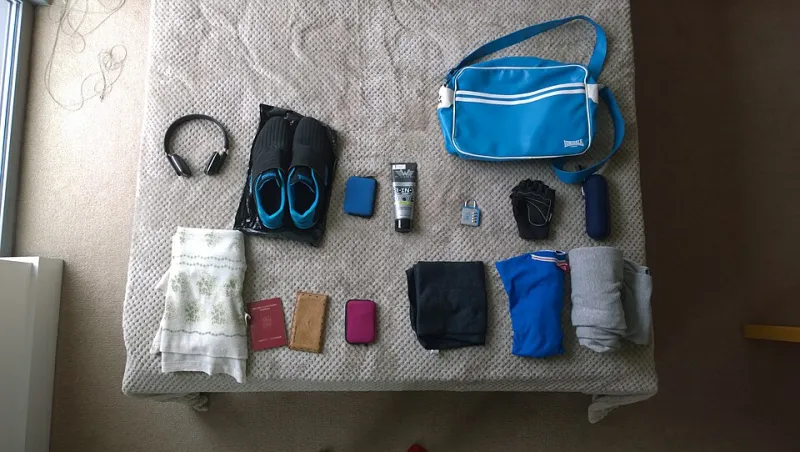
Photo: single pair of cross training trainers in gym bag on changing room bench, via 1.bp.blogspot.com
Open a typical gym bag in a UK changing room and you can often guess the owner’s week from the soles. There’s a pair of running trainers for the treadmill, a flat pair for lifting, shower slides for the cubicle, and maybe a fourth pair for the walk to the station. It looks prepared. It also looks heavy.
The one-trainer gym bag is not about being a minimalist hero. It’s about admitting that most of us do a fairly mixed week — a bit of cardio, some weights, a class, a rushed lunchtime session — and one sensible pair of trainers can cover almost all of it. Pack fewer shoes and you get a lighter bag, less faff at the locker, and one less thing to forget.
The shoe pile problem
Footwear multiplies quietly. A pair of running shoes arrives because you signed up for a 10K. Then come the lifting shoes because someone on the internet said you need a raised heel. Then the slides because changing-room floors are not to be trusted. Before long, your gym bag has become a small branch of Schuh, and you’re carrying half of it on the bus.
The real cost isn’t just weight. It’s decision fatigue. Every extra pair asks a question: which shoes for today? Did I pack the right ones? Where are the laces? And if you commute, you’re also juggling work shoes, wet-weather shoes, and whatever the British sky has decided to do since breakfast.
At Gym Tote, we are firmly in favour of packing lighter. Not because suffering is noble, but because a simpler bag makes it easier to actually turn up and train.
What a UK gym floor actually asks of you
Most high-street gyms and leisure centres are not asking for specialist footwear. A normal session might involve a treadmill warm-up, some rack work, a mat circuit, and a rowing machine. The floor could be rubber crumb, sprung wood, or a studio surface. The shoes need to grip, feel stable, and not roll around under you when you change direction.
For that mix, a decent cross-trainer or hybrid trainer is the sweet spot. Look for a firm heel, a reasonably flat and stable sole, a bit of lateral support, and enough cushioning to survive a treadmill incline without making you feel like you’re standing on a sponge. You don’t need a racing shoe. You don’t need a dedicated squat shoe unless you’re chasing serious numbers. You need one pair that behaves itself across the room.
This is the practical case for a single pair: it is the footwear equivalent of a decent all-rounder. It won’t be perfect at everything, but it will be good enough for most UK gym weeks — and that is a much better deal than carrying three pairs that are each brilliant at one thing you do for ten minutes.
The test: one pair for a normal week
I tried the one-pair system across a typical week: a Monday free-weights session, a Wednesday lunchtime treadmill run, a Thursday studio class, and a Saturday circuit. The shoes stayed on my feet for the commute and went straight into the locker. No spare pair. No slides. No emergency flip-flops.
The result was unsurprisingly boring. The bag was lighter. The locker had room to breathe. I didn’t spend the first five minutes of the session deciding which shoes to wear. The only compromise was on the treadmill: a cross-trainer feels heavier than a running shoe, and if you’re doing serious mileage, you’ll notice it. For a 20-minute warm-up or an interval blast, it was fine.
For lifting, the same pair gave enough stability for squats and deadlifts at a normal gym level. If you’re going heavy and need a raised heel or a very firm platform, that’s a different conversation. But most people in most commercial gyms are not in that conversation yet.
Where one pair falls short
Let’s be honest about the exceptions. If you run more than a few kilometres on a regular basis, a proper running shoe is worth its place. If you squat or Olympic lift at a level where footwear genuinely changes your position, a lifting shoe earns its keep. If you have plantar fasciitis, knee issues, or a history of foot problems, get advice and use what works for you — that is not overpacking, that is looking after yourself.
Shower slides are the other grey area. Many people pack them for hygiene, and that’s fair. But they don’t need to be chunky pool sliders. A thin, light pair that lives in the bottom of the bag is enough for the walk to the cubicle and back. If your gym has clean, well-maintained changing rooms and you’re comfortable barefoot, you can leave them at home. If not, keep the lightest pair you can find.
Commute shoes are a separate issue. If you wear smart shoes to work, leave them at your desk or in a drawer and travel in your trainers. That’s not a gym-bag shoe; that’s a desk shoe. The bag doesn’t need to carry your entire working wardrobe.
The exceptions worth the weight
A sensible one-pair system still allows for real exceptions:
- A proper running shoe if running is a core part of your week, not a five-minute warm-up.
- A lifting shoe if you’re following a serious strength programme and need the stability.
- Thin shower slides if changing-room hygiene is a priority for you.
- A spare pair of socks — always. That’s not footwear, that’s basic civilisation.
Notice what’s not on the list: a separate pair for every class, a pair that only matches one outfit, or a pair you keep “just in case” and never wear. If a shoe hasn’t left the bag in a month, it’s not an essential. It’s ballast.
A 60-second packing check
Before you zip up, ask three questions. First: can I do my usual week in the pair I’m wearing? If yes, stop there. Second: is there a genuine reason to pack a second pair — a long run, a heavy lifting session, a shower situation? If the reason is vague, leave it. Third: does the bag still feel light enough to carry on a busy train? If not, something has to go.
The one-trainer gym bag won’t suit everyone. But for most UK gym-goers, it’s a smarter default than a bag full of maybes. Wear the trainers, pack the socks, and give your shoulders a break. Train smarter, pack lighter — and let your shoes do the whole job.